Cooking becomes much easier when you have the right equipment within reach. A well-chosen collection of useful kitchen tools for cooking can save time, reduce effort, and make everyday meal preparation more enjoyable. You do not need a kitchen filled with expensive gadgets; a few reliable essentials can handle most tasks.
Whether you are preparing a quick breakfast, making dinner for the family, or trying a new recipe on the weekend, the right tools can make a noticeable difference. From chopping vegetables to stirring sauces and measuring ingredients, each tool has a practical purpose. The key is knowing which ones are genuinely worth keeping in your kitchen.
Why the Right Kitchen Tools Matter
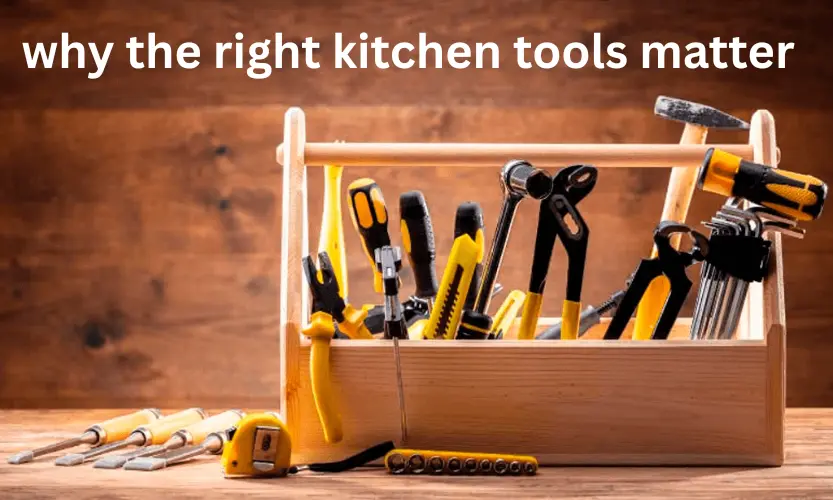
A good kitchen tool does more than make cooking convenient. It can help you work safely, prepare ingredients consistently, and achieve better results.
Imagine preparing a large family meal without a sharp knife. Chopping onions takes longer, vegetables may be cut unevenly, and the entire preparation process becomes frustrating. Now imagine having a comfortable chef’s knife, a sturdy cutting board, and a few dependable utensils. The same meal suddenly feels much more manageable.
The right tools can help you:
- Prepare ingredients faster
- Improve cutting and cooking consistency
- Reduce unnecessary effort
- Make cooking safer
- Keep your workspace organized
- Handle different recipes with confidence
- Reduce food preparation time
You also do not need dozens of specialized products. A carefully selected collection of versatile tools can cover most everyday cooking needs.
Essential Kitchen Tools Everyone Should Have
Some kitchen tools are so practical that they deserve a permanent place in almost every home kitchen.
Chef’s Knife
A chef’s knife is one of the most valuable tools you can own. It can be used for chopping vegetables, slicing meat, cutting herbs, mincing garlic, and preparing fruit.
Choose a knife that feels comfortable in your hand rather than simply choosing the most expensive option. The blade should be sharp, balanced, and easy to control.
A sharp knife is also generally safer than a dull one because it requires less pressure while cutting. However, it should always be handled carefully and stored safely.
Cutting Board
A reliable cutting board provides a stable surface for food preparation. Wooden, bamboo, plastic, and composite boards are common choices.
It is helpful to have a board that is large enough to give you room to work without ingredients constantly falling over the edges.
For households that regularly prepare raw meat, using a separate cutting board for meat and ready-to-eat foods can also make food preparation more hygienic.
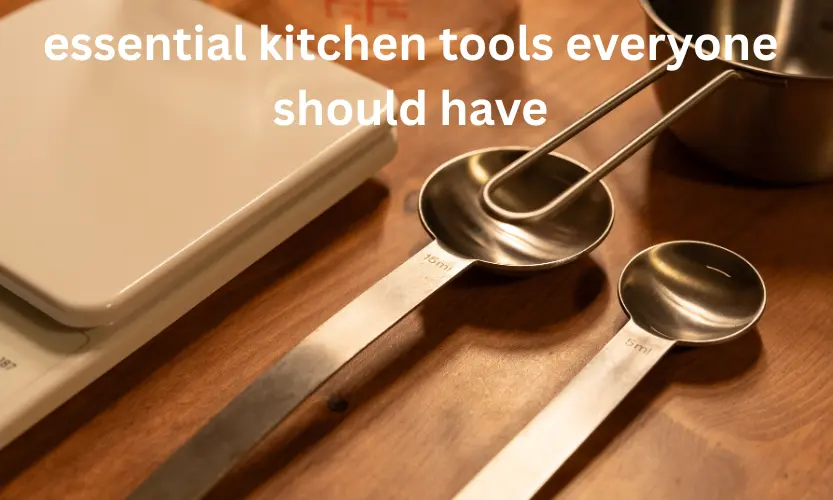
Measuring Cups and Spoons
Cooking becomes much easier when ingredients can be measured accurately.
Measuring cups are useful for ingredients such as flour, rice, sugar, milk, and other liquids, while measuring spoons are particularly helpful for spices, baking ingredients, oils, and sauces.
Experienced cooks may eventually learn to estimate many ingredients, but accurate measurements are especially important when baking.
Mixing Bowls
A set of mixing bowls can be used for much more than mixing.
You can use them to combine ingredients, marinate meat, prepare salads, whisk eggs, wash produce, or hold chopped vegetables while cooking. Different sizes are useful because some recipes require a small bowl for spices and a large bowl for combining several ingredients.
Cooking Utensils That Make Everyday Meals Easier
Once your basic preparation tools are covered, the next step is choosing utensils that make cooking easier.
Wooden Spoon
A wooden spoon is a simple but incredibly useful utensil. It can be used for stirring soups, curries, sauces, rice dishes, and vegetables. Because wooden spoons are gentle on many cookware surfaces, they are particularly useful when working with non-stick pans.
Keep one near the stove and you will probably find yourself reaching for it regularly.
Silicone Spatula
A silicone spatula is useful for scraping bowls, folding ingredients, stirring sauces, and getting every last bit of batter or mixture from a container.
Its flexible edge can reach corners that rigid utensils often miss. It is especially helpful when baking, where wasting a little batter repeatedly can add up over time.
Tongs
Kitchen tongs give you a secure grip when handling food. They are useful for turning vegetables, lifting pasta, serving salad, handling grilled food, and flipping pieces of meat.
A pair with comfortable handles and a good grip can quickly become one of the most frequently used utensils in your kitchen.
Whisk
A whisk is essential for mixing liquids and creating smooth mixtures.
It can be used for beating eggs, preparing sauces, mixing pancake batter, combining salad dressings, and incorporating ingredients into a smooth consistency.
Even if you rarely bake, a whisk is still useful for everyday meals.
Slotted Spoon
A slotted spoon allows you to lift food while leaving excess liquid behind.
It is particularly useful for vegetables, pasta, boiled foods, and fried items. Instead of transferring a large amount of cooking water or oil along with your food, the slots allow the liquid to drain away.
Useful Tools for Food Preparation
Food preparation often takes more time than the actual cooking. A few practical tools can make this stage much faster.
Vegetable Peeler
A vegetable peeler is useful for potatoes, carrots, cucumbers, apples, and other produce. A sharp peeler removes thin layers without taking away too much of the edible portion underneath.
It is a small tool, but one that can save considerable time when preparing large quantities of vegetables.
Grater
A grater is useful for cheese, carrots, ginger, garlic, chocolate, and many other ingredients. A box grater can provide several grating surfaces, making it a versatile option for different recipes.
Freshly grated ingredients can also add texture and flavor to dishes, making this inexpensive tool surprisingly valuable.
Garlic Press
If you frequently cook with garlic, a garlic press can save time. Instead of finely chopping several cloves by hand, you can quickly crush them into sauces, marinades, dressings, and cooked dishes.
However, it is not essential if you are comfortable chopping garlic with a knife.
Kitchen Shears
Kitchen shears can handle tasks that would be awkward with a knife. They can be used to cut herbs, trim meat, open food packaging, cut poultry, or divide certain foods into smaller portions.
Choose sturdy shears that are comfortable to hold and easy to clean.
Colander
A colander is essential for draining pasta, washing vegetables, rinsing rice, and handling other foods that need to be separated from water.
A sturdy colander with comfortable handles is particularly convenient because hot foods can be heavy when wet.
Cookware That Belongs in a Practical Kitchen
Tools are important, but cookware is just as essential. You can have the best utensils in the world, but you still need dependable pans and pots to prepare meals.
Frying Pan
A frying pan is one of the most versatile pieces of cookware. You can use it to fry eggs, sauté vegetables, cook meat, prepare pancakes, heat leftovers, and make quick sauces.
A medium-sized frying pan is a practical starting point for most kitchens. If you cook for several people regularly, a larger pan can be useful as well.
Saucepan
A saucepan is ideal for smaller quantities of food and liquids. It can be used for heating milk, making sauces, boiling eggs, cooking rice, preparing soup, and reheating food.
A saucepan with a comfortable handle and well-fitting lid can serve many purposes.
Large Cooking Pot
A larger pot is useful when cooking meals for several people. It can handle pasta, soups, stews, rice dishes, curries, and boiled vegetables.
If your household regularly prepares food in large batches, a durable cooking pot can save you from having to divide meals between smaller pans.
Baking Tray
Even people who do not bake frequently can find a baking tray useful. It can be used for roasting vegetables, baking chicken, preparing cookies, reheating food, and making simple oven meals.
A sturdy tray with enough surface area gives you plenty of options.
Kitchen Tools for Baking
Baking requires greater accuracy than many everyday cooking methods, which makes the right tools especially helpful.
Kitchen Scale
A kitchen scale allows ingredients to be measured by weight rather than volume.
This can be particularly useful for baking because small differences in ingredient quantities can affect the final texture and structure of baked goods.
Rolling Pin
A rolling pin is useful for flattening dough for cookies, pastries, flatbreads, and other baked foods.
You do not need a professional baker’s rolling pin. A simple, comfortable model is enough for most home kitchens.
Pastry Brush
A pastry brush can be used to spread butter, oil, egg wash, or sauces across food. It is particularly helpful when preparing pastries and baked dishes that need an even coating.
Tools That Improve Cooking Efficiency
A good kitchen setup is not only about having more equipment. It is about making each cooking step easier.
Kitchen Timer
A timer can prevent food from being forgotten on the stove or in the oven.
This is especially useful when preparing several dishes at once. You can focus on chopping vegetables or preparing another component without constantly watching the clock.
Instant-Read Thermometer
A food thermometer can help determine whether certain foods have reached a safe internal temperature. It can also be useful when preparing meat, poultry, bread, and other foods where temperature affects the final result.
Oven Mitts
Never underestimate the importance of proper protection around hot cookware.
A good pair of oven mitts or heat-resistant gloves provides protection when handling hot trays, pots, and dishes. Choose a pair that fits securely and provides enough coverage for comfortable handling.
Kitchen Apron
An apron protects clothing from splashes, spills, flour, oil, and sauces.
It also gives you a designated place to keep a small towel while cooking, depending on the apron design. A comfortable apron is particularly useful when preparing messy recipes.
Useful Kitchen Tools for Small Kitchens
Limited space does not mean you need to compromise on cooking.
If your kitchen is small, prioritize tools that serve multiple purposes. A chef’s knife can replace several specialized cutting tools. A large mixing bowl can handle preparation, serving, and storage. A medium frying pan can prepare everything from breakfast to dinner.
Look for:
- Stackable bowls
- Nesting measuring cups
- Foldable or compact colanders
- Multi-purpose utensils
- Wall-mounted storage solutions
- Magnetic knife storage
- Drawer organizers
- Compact cookware
Before buying another gadget, ask yourself whether it solves a real problem or simply takes up valuable space.
How to Choose Quality Kitchen Tools
Buying kitchen tools should not become a race to collect everything available.
Start with the tasks you perform most often. If you cook vegetables and meat every day, prioritize a good knife and cutting board. If you bake regularly, invest in accurate measuring equipment and suitable baking tools.
Consider Durability
A tool that lasts for years can be more useful than a cheaper item that needs replacing frequently. Look for sturdy construction, comfortable handles, and materials appropriate for the job.
Consider Comfort
You may use certain tools hundreds of times, so comfort matters. A knife that feels awkward or a utensil with an uncomfortable handle can make cooking unnecessarily tiring.
Consider Cleaning
Tools that are difficult to clean may spend more time sitting in the sink than helping you cook. Choose equipment that can be cleaned easily and maintained without excessive effort.
Consider Versatility
A versatile tool can perform several jobs.
For example, tongs can help turn food, serve dishes, toss salads, and handle ingredients. A chef’s knife can perform a wide range of cutting tasks. Versatility is particularly valuable when you have limited storage space.
How to Organize Your Kitchen Tools
Even the most useful tools become frustrating when you cannot find them. Keep everyday utensils in a container near your main preparation or cooking area. Store knives safely and keep measuring tools together.
Group similar items so you can quickly find what you need. For example, baking equipment can stay together, while cooking utensils can be stored close to the stove. Avoid filling every drawer and cabinet simply because there is space. A cluttered kitchen can make meal preparation slower.
Common Mistakes When Buying Kitchen Tools
One common mistake is buying a specialized gadget before purchasing basic essentials. A garlic slicer may look interesting, but it is less important than having a sharp knife. Similarly, a decorative serving tool may be less useful than a reliable pair of tongs.
Another mistake is choosing appearance over function. Beautiful equipment can make a kitchen look attractive, but it still needs to work well. It is also easy to buy too many low-quality items. Instead, gradually build a collection of dependable tools that you genuinely use.
You may also like these
Small Kitchen Ideas for Home You’ll Love
Stunning Modern Kitchen Ideas on Budget
Genius Kitchen Storage Ideas for Small Spaces
Simple Kitchen Organization Ideas for a Clutter-Free Home
Brilliant Small Kitchen Layout Ideas That Wow
How to Build Your Kitchen Collection Over Time
You do not need to buy everything at once.
Start with the basics:
- Chef’s knife
- Cutting board
- Frying pan
- Saucepan
- Cooking pot
- Mixing bowls
- Measuring cups
- Measuring spoons
- Wooden spoon
- Spatula
- Tongs
- Whisk
- Colander
- Vegetable peeler
Once these essentials are covered, you can add specialized tools according to your cooking habits.
Someone who loves baking may want a kitchen scale and rolling pin. Someone who prepares large family meals may benefit from larger cookware. Someone who makes salads frequently might appreciate additional preparation tools. Your kitchen should reflect how you actually cook.
Final Thoughts
Cooking does not have to feel complicated, and you certainly do not need a cupboard overflowing with gadgets to prepare delicious meals. A few dependable tools can make chopping, measuring, stirring, cooking, and serving considerably easier. The best approach is to choose equipment that fits your cooking style, available space, and everyday needs. Whether you are a complete beginner or an experienced home cook, the right useful kitchen tools for cooking can turn ordinary meal preparation into a smoother, more enjoyable experience.
FAQs
What are the most useful kitchen tools for cooking?
Some of the most useful kitchen tools for cooking include a chef’s knife, cutting board, measuring cups, measuring spoons, mixing bowls, spatula, tongs, whisk, peeler, and kitchen timer.
Which kitchen tools are essential for beginners?
Beginners can start with a chef’s knife, cutting board, saucepan, frying pan, spatula, wooden spoon, measuring cups, measuring spoons, mixing bowl, and colander.
Why are good kitchen tools important?
Good kitchen tools can make food preparation faster, safer, and more convenient. They also help improve consistency when chopping, measuring, mixing, cooking, and serving food.
What kitchen tools make cooking easier?
Tools such as food processors, vegetable peelers, garlic presses, tongs, silicone spatulas, measuring tools, and kitchen timers can simplify everyday cooking tasks.
How do I choose useful kitchen tools?
Choose tools based on how often you cook, the meals you prepare, your available storage space, and your budget. Prioritize durable, versatile tools that can perform multiple tasks.