A clean kitchen can make everyday cooking feel easier, calmer, and far more enjoyable. How to keep kitchen clean is less about spending hours scrubbing and more about building simple habits that prevent dirt, grease, clutter, and unpleasant odors from taking over.
Whether you cook several meals a day or only prepare food occasionally, a tidy kitchen creates a better environment for preparing meals and spending time with family. The good news is that you do not need an elaborate routine. A few practical changes can make a noticeable difference.
Why Keeping the Kitchen Clean Matters

The kitchen is one of the busiest areas in most homes. Food is prepared, dishes are washed, groceries are unpacked, and spills happen throughout the day. Without regular cleaning, small messes can quickly become stubborn stains and unpleasant odors.
A clean kitchen also makes cooking more enjoyable. When countertops are clear and utensils are easy to find, preparing dinner does not feel like another chore before the actual meal has even started.
There is also a practical reason to stay on top of kitchen cleaning. Food residue, grease, and moisture can attract unwanted pests and create an unpleasant environment. Regular cleaning helps keep surfaces fresh and reduces the buildup that becomes harder to remove later.
The trick is not perfection. It is consistency.
Create a Simple Daily Kitchen Cleaning Routine
One of the easiest ways to maintain a clean kitchen is to stop thinking of cleaning as one huge task. Instead, divide it into small jobs throughout the day.
Clean While You Cook
Instead of leaving every bowl, spoon, cutting board, and pan until the end, wash or put away items as soon as you no longer need them.
For example, while a sauce is simmering, you can rinse the mixing bowl. While vegetables are roasting, you can wipe the preparation area. These small moments add up.
By the time the meal is ready, much of the cleaning is already done.
Wipe Spills Immediately
A fresh spill is usually much easier to remove than a dried one. Sauce, oil, milk, coffee, and other liquids can leave marks if they sit on a surface for too long.
Keep a suitable cleaning cloth nearby so you can deal with spills immediately rather than allowing them to become another task for later.
Deal With Dishes Promptly
A sink filled with dirty dishes can make an otherwise clean kitchen look chaotic.
Wash dishes after meals or load them into the dishwasher if you have one. Once they are clean, allow them to dry properly before putting them away.
If washing everything immediately is not realistic, at least rinse food from plates and soak stubborn cookware. This makes later cleaning considerably easier.
Keep Your Kitchen Counters Clutter-Free
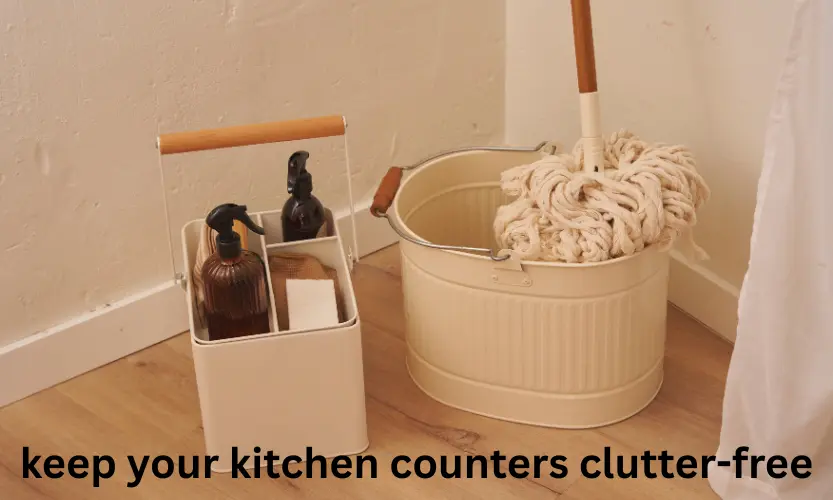
A clean countertop can instantly make a kitchen look more organized.
The problem is that counters often become temporary storage areas. Mail, shopping bags, appliances, bottles, utensils, and random household items can slowly take over.
Give Everything a Home
Every frequently used kitchen item should have a logical place.
Keep cooking utensils close to the area where you use them. Store ingredients together. Keep appliances that you rarely use inside cabinets instead of allowing them to occupy valuable counter space.
When everything has a home, tidying becomes much quicker.
Clear Counters Before Bed
A few minutes at night can make a major difference the following morning.
Put away ingredients, return appliances to their places, wipe the counters, and remove unnecessary items. Waking up to a clean kitchen feels much better than starting the day by facing yesterday’s mess.
Keep the Sink Fresh and Clean
The kitchen sink handles a surprising amount of dirt every day. Food particles, grease, soap residue, and dirty water can accumulate around it.
Rinse the sink after washing dishes and remove food debris rather than allowing it to remain around the drain. Give the basin a more thorough cleaning regularly, paying attention to the edges, drain area, faucet, and handles.
Do not forget the sponge or dishcloth either. These items stay damp and can develop unpleasant odors when they are not cleaned or replaced regularly.
Clean the Stovetop After Cooking
The stovetop is one of the first places where grease becomes noticeable.
A small amount of splattered oil may seem harmless, but repeated cooking without cleaning can create a sticky layer that becomes increasingly difficult to remove.
Allow the surface to cool appropriately, then clean it according to the manufacturer’s instructions. Pay special attention to areas around burners and controls where food particles and grease often collect.
Do Not Ignore Small Grease Spots
You do not have to wait until the entire stovetop looks dirty.
If you notice a greasy mark, deal with it during your regular kitchen reset. Removing a small spot takes seconds compared with trying to remove a thick layer of old grease later.
Make Refrigerator Cleaning Part of Your Routine
The refrigerator is easy to forget because its mess is hidden behind a door.
However, spills and forgotten food can quickly create odors and sticky shelves.
Check Food Regularly
Whenever you bring home new groceries, take a quick look at what is already inside. Remove food that is spoiled or clearly past its useful life.
This prevents overcrowding and makes it easier to see what you actually have.
Wipe Spills Quickly
If something leaks inside the refrigerator, clean it as soon as practical. Dried spills can become much more difficult to remove.
Use cleaning products appropriate for the refrigerator’s interior surfaces and follow the appliance manufacturer’s recommendations.
Do Not Forget Kitchen Appliances
Small appliances often receive less attention than counters and floors.
Microwaves, toaster ovens, coffee makers, kettles, blenders, and other frequently used appliances can collect food particles, splashes, grease, and residue.
Wipe the exterior regularly and clean removable parts according to their care instructions.
Clean Appliances According to Their Materials
Not every appliance should be treated with the same cleaner. Some surfaces can be damaged by abrasive products or excessive moisture.
Before cleaning an appliance, check its care instructions and use the appropriate method. This helps protect the appliance while keeping it looking fresh.
Keep Kitchen Cabinets Looking Fresh
Cabinet doors are another area where fingerprints, cooking grease, and dust can accumulate.
You do not necessarily need to clean every cabinet every day. Instead, wipe visible marks when they appear and give the fronts a more thorough cleaning during your weekly routine.
Pay particular attention to handles because they are touched frequently.
Inside cabinets, organize items so that frequently used ingredients and cookware are easy to reach. A well-organized cabinet is easier to keep clean because items are less likely to be knocked over or forgotten.
Clean the Kitchen Floor Regularly
Food crumbs and dust naturally make their way onto the kitchen floor.
Sweeping or vacuuming regularly prevents debris from building up. If something spills, clean it promptly rather than allowing it to become sticky or attract dirt.
Mopping frequency depends on how heavily the kitchen is used. A household that cooks several meals every day may need to mop more frequently than someone who rarely prepares food at home.
The important thing is to clean according to the actual condition of the floor rather than following an unnecessarily complicated schedule.
Use a Weekly Deep-Cleaning Routine
Daily habits handle most surface-level messes, but some areas still need extra attention. Choose a day each week when you have enough time to work through the less obvious cleaning tasks.
A Useful Weekly Checklist
Your weekly routine can include:
- Wiping cabinet doors and handles
- Cleaning the backsplash
- Scrubbing the sink
- Cleaning the stovetop thoroughly
- Wiping appliance exteriors
- Checking the refrigerator
- Sweeping and mopping the floor
- Cleaning frequently touched surfaces
- Emptying and cleaning the trash area
- Washing reusable cleaning cloths and sponges as appropriate
You do not have to complete every task at exactly the same time. Divide them throughout the week if that makes the routine easier.
Deal With Kitchen Grease Before It Builds Up
Grease is one of the biggest reasons a kitchen can start looking dirty even when there is no obvious mess. Cooking oils can settle on nearby surfaces, especially around the stovetop and cooking area. Over time, dust sticks to the grease, creating a stubborn layer.
The best approach is prevention. Use suitable ventilation while cooking, wipe visible splashes, and clean cooking surfaces regularly. Do not allow grease to accumulate for weeks before tackling it.
Always choose cleaning products that are suitable for the specific surface. Natural stone, wood, painted surfaces, stainless steel, and other materials can require different care.
Keep Trash Under Control
A clean kitchen can quickly feel unpleasant if the garbage bin is overflowing. Empty kitchen waste regularly, particularly when it contains food scraps. Clean the inside and outside of the bin when necessary.
If the bin develops an odor, check for leaks or food residue around the bottom and sides. Keeping garbage under control is a small habit, but it has a significant effect on how fresh the entire kitchen feels.
Organize Your Kitchen to Make Cleaning Easier
Cleaning becomes much easier when your kitchen is organized sensibly.
Think about the items you use most often. Keep them within easy reach. Items used only occasionally can be stored in less accessible cabinets. Avoid filling every shelf and drawer to maximum capacity. Leaving a little space makes it easier to remove items, wipe surfaces, and put everything back.
Follow the One-In, One-Out Rule
When you buy a new kitchen gadget, container, or utensil, consider whether you already own something that performs the same job. too many unnecessary items create clutter and make cleaning harder.
A kitchen does not need to be packed with equipment to be functional. Sometimes having fewer things actually makes cooking easier.
Build a Five-Minute Kitchen Reset
If you struggle to keep up with cleaning, try a short reset instead of waiting for motivation to appear.
Set aside five minutes at the end of the day.
During those five minutes:
- Put away ingredients.
- Clear the counters.
- Put dishes where they belong.
- Wipe the main work surfaces.
- Sweep obvious crumbs.
- Take out the trash if necessary.
You may be surprised by how much can be accomplished in five focused minutes.
The goal is not to make the kitchen spotless every night. The goal is to prevent small messes from becoming large ones.
Avoid These Common Kitchen Cleaning Mistakes
Even people who clean regularly can accidentally make the process harder.
Leaving Spills Until Later
A small spill can become a stubborn stain. Clean it while it is still fresh whenever possible.
Using the Same Cloth Everywhere
A cloth used on a dirty surface should not automatically be used on another area without being cleaned appropriately. Keep cleaning materials organized and replace or wash them regularly.
Ignoring Handles and High-Touch Areas
Cabinet handles, refrigerator handles, appliance controls, and faucet handles are frequently touched. Include them in your regular cleaning routine.
Overloading the Counters
The more items sitting on the counter, the more difficult it becomes to wipe the surface properly.
Waiting for a Huge Cleaning Day
When cleaning is postponed repeatedly, the workload becomes overwhelming. Short, regular sessions are generally easier to manage.
Make Kitchen Cleaning Less Stressful
Cleaning does not have to feel like punishment.
Put on music while you work, involve family members, or turn the routine into a simple household habit. One person can handle dishes while another wipes counters or sweeps the floor.
If several people use the kitchen, everyone should contribute to keeping it tidy. Even children can learn simple tasks appropriate for their age, such as putting away safe items or clearing the table.
The more responsibility is shared, the less pressure falls on one person.
A Simple Daily Kitchen Schedule
A practical routine can look like this:
Morning
After breakfast, wash or load dishes and wipe the main surfaces.
During the Day
Clean spills when they happen and tidy ingredients after cooking.
After Lunch or Dinner
Wash dishes, wipe the cooking area, and return items to their proper places.
Before Bed
Do a quick five-minute reset. Clear counters, check the sink, remove trash if needed, and sweep visible crumbs. This routine does not require hours of work. It simply spreads cleaning across the day.
How to Stay Consistent
The biggest challenge is often not knowing what to clean. It is remembering to do it consistently. Instead of creating a complicated schedule with dozens of tasks, focus on a few non-negotiable habits.
Wash dishes regularly. Wipe cooking surfaces. Keep counters clear. Remove food waste. Clean spills immediately. Once these habits become automatic, the kitchen naturally stays cleaner.
You also do not need to clean every corner every day. Save deeper tasks for your weekly routine and focus daily effort on the areas that become dirty fastest.
You may also like these
Small Kitchen Ideas for Home You’ll Love
Stunning Modern Kitchen Ideas on Budget
Genius Kitchen Storage Ideas for Small Spaces
Simple Kitchen Organization Ideas for a Clutter-Free Home
Brilliant Small Kitchen Layout Ideas That Wow
Turn Cleaning Into a Habit, Not a Chore
Imagine coming home after a long day and seeing dishes stacked in the sink, crumbs across the counter, and yesterday’s cooking mess still sitting on the stove. Even if the kitchen is not truly filthy, the visual clutter can make the entire home feel stressful.
Now imagine the opposite. The counters are clear. The dishes are done. The sink is fresh. The stovetop has been wiped. Everything has a place.
That difference does not require a professional cleaner or an entire afternoon. It often comes from a handful of small decisions repeated every day. The secret is to clean little and often instead of allowing everything to pile up.
Final Thoughts
A clean kitchen is created through simple habits rather than exhausting cleaning sessions. When you clean while cooking, deal with spills immediately, keep counters clear, wash dishes promptly, organize your storage, and follow a short daily reset, maintaining the space becomes much easier. You do not need perfection; you need a routine that fits naturally into your day. Once those habits become part of everyday life, how to keep kitchen clean stops feeling like a difficult question and becomes a simple part of running a comfortable, welcoming home.
FAQs
How can I keep my kitchen clean every day?
Clean as you cook, wipe counters after meals, wash dishes promptly, and return ingredients and utensils to their proper places. Small daily habits prevent mess from building up.
What should I clean in my kitchen every day?
Focus on countertops, the sink, stovetop, dining surfaces, and frequently touched handles. Sweep the floor when needed and remove food waste regularly.
How do I keep my kitchen clean without spending hours?
Use a quick cleaning routine throughout the day. Wipe spills immediately, clean while cooking, wash dishes after eating, and spend a few minutes resetting the kitchen before bed.
How often should I deep clean my kitchen?
A thorough deep clean is usually helpful once a week or every two weeks, depending on how often you cook. This can include cabinets, appliances, backsplash, floors, and hard-to-reach areas.
What is the best way to prevent kitchen mess?
Prevent messes before they become difficult to clean. Use containers for ingredients, clean spills immediately, avoid leaving dishes in the sink, and keep frequently used items organized.