
A well-equipped kitchen can make everyday cooking feel less stressful and much more enjoyable. When the right tools are within reach, chopping vegetables, preparing sauces, measuring ingredients, and serving meals become simpler tasks.
Whether you are preparing your first homemade dinner or already enjoy experimenting with new recipes, having the must have kitchen tools can save time, improve your results, and make your kitchen more practical.
Why the Right Kitchen Tools Matter
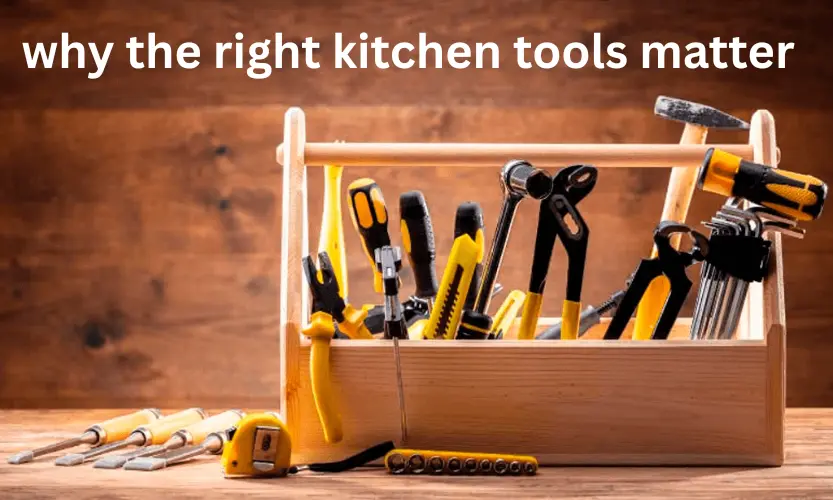
Cooking is not only about having good ingredients. The tools you use can affect how quickly you prepare food, how evenly it cooks, and how easily you can complete each step.
Imagine coming home after a long day and deciding to make a quick vegetable stir-fry. Without a decent knife, chopping takes twice as long. Without a suitable pan, the vegetables may cook unevenly. Without tongs, turning and serving everything becomes awkward.
The right equipment removes many of these small frustrations.
Good kitchen tools also encourage you to cook more often. When preparation feels simple rather than exhausting, making a homemade meal becomes much more appealing.
Must Have Kitchen Tools for Everyday Cooking
You do not need a cupboard filled with dozens of gadgets. A carefully selected collection of reliable essentials can handle most everyday recipes.
Chef’s Knife
A sharp chef’s knife is one of the most valuable tools in any kitchen. It can be used for chopping vegetables, slicing meat, mincing herbs, and preparing fruit.
Choose a knife that feels comfortable in your hand. The handle should provide a secure grip, while the blade should be sharp enough to cut cleanly without requiring excessive force.
A good knife can dramatically speed up food preparation.
Cutting Board
A sturdy cutting board protects your countertops while giving you a stable surface for food preparation.
Wood, bamboo, plastic, and composite boards are common choices. Whatever material you prefer, look for a board that is large enough to work comfortably without taking over your entire counter.
It is also useful to have separate boards for different types of food if your cooking routine requires it.
Measuring Cups and Spoons
Accurate measurements can make a significant difference, particularly when baking or following recipes with specific ingredient ratios.
Measuring cups are useful for ingredients such as flour, sugar, rice, and liquids, while measuring spoons are ideal for smaller quantities of spices, baking powder, salt, and extracts.
They are inexpensive, simple, and surprisingly important.
Mixing Bowls
A set of mixing bowls gives you space to combine ingredients, prepare sauces, whisk eggs, marinate food, and organize ingredients before cooking.
Different sizes are especially useful. A small bowl can hold spices or chopped herbs, while a larger bowl can accommodate salad, dough, or batter.
Stackable bowls are a smart choice when storage space is limited.
Wooden Spoon
The humble wooden spoon remains one of the most useful kitchen utensils.
It works well for stirring soups, sauces, rice, vegetables, and many other dishes. Wooden spoons are also gentle on many cookware surfaces.
Keeping one or two nearby means you always have a dependable utensil for stirring and mixing.
Silicone Spatula
A silicone spatula is particularly useful when scraping bowls, folding ingredients, spreading mixtures, and stirring food. Its flexible edge can help you get the last bit of batter or sauce from a bowl instead of leaving it behind.
A heat-resistant silicone spatula can also be useful during stovetop cooking, provided it is designed for high temperatures.
Tongs
Tongs give you better control when handling food in a pan, oven, or serving dish. They are useful for turning vegetables, picking up pasta, serving salad, handling grilled foods, and transferring ingredients.
Look for tongs with a comfortable grip and a locking mechanism if convenient storage matters to you.
Vegetable Peeler
A vegetable peeler makes quick work of potatoes, carrots, cucumbers, apples, and other produce. A sharp peeler should remove thin layers of skin without wasting too much of the edible portion underneath.
This small tool takes up very little drawer space but can make food preparation considerably faster.
Essential Tools for Baking
Even if baking is not part of your daily routine, a few basic tools can make occasional baking much easier.
Whisk
A whisk is useful for beating eggs, combining dry ingredients, preparing sauces, and creating smooth mixtures. A balloon whisk is a versatile option for general cooking and baking.
Baking Trays
A couple of sturdy baking trays can be used for cookies, roasted vegetables, chicken, pastries, and other oven-based meals.
Choose trays that are easy to clean and large enough for the amount of food you normally prepare.
Rolling Pin
If you enjoy making homemade flatbreads, pastries, cookies, or pizza, a rolling pin can become an essential part of your kitchen. A simple wooden or easy-to-clean rolling pin is usually enough for everyday use.
Useful Tools for Food Preparation
Food preparation often takes more time than the actual cooking. A few smart tools can reduce that workload.
Kitchen Scissors
Kitchen scissors are useful for cutting herbs, trimming meat, opening food packaging, and preparing ingredients. They are particularly convenient for tasks where reaching for a knife and cutting board would feel unnecessary.
Choose a strong pair that can be separated for easier cleaning if possible.
Garlic Press
If you regularly cook dishes containing garlic, a garlic press can save time. Instead of finely chopping several cloves by hand, you can crush them quickly and add them directly to your dish.
It is not essential for every cook, but garlic lovers may find it extremely convenient.
Grater
A box grater or handheld grater can be used for cheese, carrots, vegetables, citrus zest, and other ingredients. A grater with different surfaces gives you flexibility, allowing one tool to handle several preparation jobs.
Colander
A colander is essential for draining pasta, washing vegetables, rinsing rice, and preparing fresh produce. Choose one that is stable and large enough for the quantities you normally cook.
Cookware You Should Not Overlook
Kitchen tools are not limited to utensils. The cookware you use is equally important.
Reliable Frying Pan
A dependable frying pan is one of the most frequently used pieces of cookware. It can handle eggs, vegetables, pancakes, chicken, sandwiches, and countless other meals.
A medium-sized pan is a practical starting point because it is large enough for everyday meals without becoming difficult to handle.
Saucepan
A saucepan is useful for heating milk, making sauces, cooking grains, preparing soups, boiling eggs, and reheating food. A saucepan with a comfortable handle and a well-fitting lid can become an everyday kitchen favourite.
Large Cooking Pot
A larger pot is useful when preparing soup, pasta, rice, stews, or meals for several people. If you regularly cook for your family, having a generously sized pot can save you from preparing food in several smaller batches.
Baking Dish
A sturdy baking dish can be used for casseroles, roasted meals, baked pasta, desserts, and many family-style dishes.
A versatile baking dish earns its place in the kitchen because it can move from preparation to the oven and, depending on the material, sometimes directly to the table.
Kitchen Tools That Save Time
Some tools are valuable because they reduce repetitive work.
Food Processor
A food processor can chop, shred, slice, blend, and mix depending on its attachments. It can be particularly helpful when preparing large quantities of vegetables, sauces, dips, or dough.
However, it is worth considering how often you will use it before purchasing one because it requires more storage space than simple hand tools.
Blender
A blender is useful for smoothies, soups, sauces, shakes, chutneys, and other blended foods.
For households that regularly prepare drinks or blended recipes, it can become one of the most frequently used appliances.
Kitchen Scale
A kitchen scale provides precise measurements by weight. It is especially helpful for baking, portioning ingredients, and following recipes where accuracy matters.
For anyone who enjoys experimenting with baking, a digital scale can be a particularly useful addition.
Choosing the Right Kitchen Tools
Buying every interesting gadget you see is rarely the best approach. Instead, think about how you actually cook.
If you prepare simple family meals every evening, prioritize knives, cutting boards, pans, pots, measuring tools, spatulas, spoons, and tongs.
If you love baking, focus more heavily on measuring equipment, mixing bowls, baking trays, a whisk, a rolling pin, and other baking essentials. If you have a small kitchen, choose tools that serve multiple purposes and are easy to store.
Consider Durability
A kitchen tool should be able to withstand regular use. Look for sturdy handles, strong construction, reliable materials, and designs that do not feel flimsy.
Spending slightly more on an item that you use every day can be worthwhile if it lasts significantly longer.
Think About Comfort
A tool may look excellent on a shelf but still be frustrating to use. Before buying a knife, peeler, whisk, or other handheld tool, consider its grip, weight, and overall comfort.
If something feels awkward in your hand, you are unlikely to enjoy using it regularly.
Prioritize Versatility
The best kitchen tools often have more than one purpose.
A chef’s knife can perform numerous cutting tasks. A large mixing bowl can be used for salads, dough, marinades, and food preparation. A sturdy frying pan can handle breakfast, lunch, and dinner.
Versatile tools are particularly valuable when kitchen space is limited.
Organizing Your Kitchen Tools
Having good tools is helpful, but finding them when you need them is just as important.
Keep frequently used utensils close to your main preparation area. Knives can be stored in a knife block, magnetic strip, or another safe storage system. Measuring spoons and small utensils can stay together in a drawer or container.
Group similar items together. Keep baking equipment in one area, cooking utensils in another, and food preparation tools somewhere easy to reach.A little organization can turn a crowded kitchen into a much more efficient workspace.
How to Maintain Your Kitchen Tools
Proper care can extend the life of your kitchen equipment. Wash tools according to their material and manufacturer instructions. Dry items properly rather than leaving moisture sitting on them for long periods.
Knives should be kept sharp and stored safely. Wooden utensils may require occasional care to prevent them from becoming excessively dry or damaged.
Do not continue using cracked cutting boards, damaged utensils, or cookware with serious surface damage. Replacing worn-out equipment is better than allowing it to become a safety problem.
Common Mistakes When Buying Kitchen Tools
One common mistake is buying too many specialized gadgets. A tool designed for one very specific task may seem exciting, but if you only use it twice a year, it may not deserve valuable storage space.
Another mistake is choosing appearance over function. A beautiful tool is nice to have, but it should still feel comfortable and perform its job properly.
Buying very cheap tools can also become expensive over time if they break quickly and need constant replacement. Finally, avoid purchasing everything at once. Build your collection gradually based on your cooking habits.
Building a Practical Kitchen Tool Collection
If you are starting from scratch, begin with the basics. A chef’s knife, cutting board, frying pan, saucepan, cooking pot, mixing bowls, measuring cups and spoons, spatula, wooden spoon, tongs, peeler, whisk, and colander can cover a surprisingly large range of cooking tasks.
Once you know what you use most frequently, add specialized tools according to your needs.
Someone who makes homemade bread may want a dough scraper and kitchen scale. Someone who prepares lots of fresh vegetables might appreciate a food processor. Someone who enjoys smoothies may prefer a powerful blender. The goal is not to own the largest collection. The goal is to own tools that genuinely make your cooking easier.
You may also like these
Small Kitchen Ideas for Home You’ll Love
Stunning Modern Kitchen Ideas on Budget
Genius Kitchen Storage Ideas for Small Spaces
Simple Kitchen Organization Ideas for a Clutter-Free Home
Brilliant Small Kitchen Layout Ideas That Wow
Creating a Kitchen You Enjoy Using
There is something satisfying about opening a drawer and finding exactly what you need.
You do not have to own professional restaurant equipment to create an efficient kitchen. A small collection of reliable tools can make homemade meals faster, cleaner, and more enjoyable. The most useful kitchen is one designed around the person who actually cooks in it.
Pay attention to your habits. Which tasks annoy you? Which ingredients take the longest to prepare? Which tools do you reach for every day? Your answers will tell you what deserves a place in your kitchen.
Final Thoughts
A kitchen does not become useful because it contains the most gadgets. It becomes useful when every important tool has a purpose and makes cooking feel easier. From a sharp chef’s knife and sturdy cutting board to dependable cookware, measuring tools, spatulas, and tongs, the right essentials can completely change your cooking routine. Start with what you genuinely need, choose quality where it matters, and build your collection over time. With the right must have kitchen tools, everyday cooking can become simpler, faster, and far more enjoyable.
FAQs
What are the must have kitchen tools for every home?
Must have kitchen tools include a chef’s knife, cutting board, measuring cups and spoons, mixing bowls, spatula, tongs, peeler, whisk, and a reliable can opener.
Which kitchen tools are most useful for beginners?
Beginners should start with versatile essentials such as a sharp chef’s knife, cutting board, measuring tools, wooden spoon, spatula, tongs, mixing bowls, and a peeler.
How do I choose the right kitchen tools?
Choose tools based on durability, comfort, versatility, ease of cleaning, and how often you cook. Prioritize practical tools that can perform multiple tasks.
What kitchen tools make cooking easier?
Tools such as food processors, vegetable peelers, garlic presses, measuring tools, kitchen scissors, tongs, and nonstick spatulas can make everyday cooking faster and easier.
How many kitchen tools does a basic kitchen need?
A basic kitchen does not need dozens of gadgets. Around 15–20 carefully selected essentials can handle most everyday cooking, baking, chopping, and food-preparation tasks.